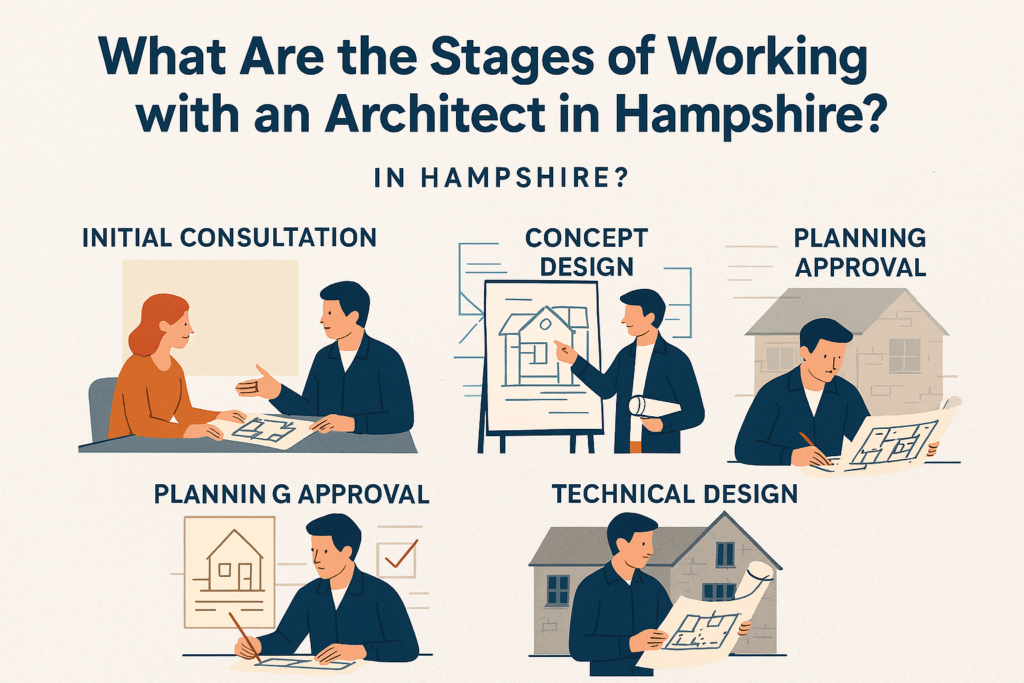
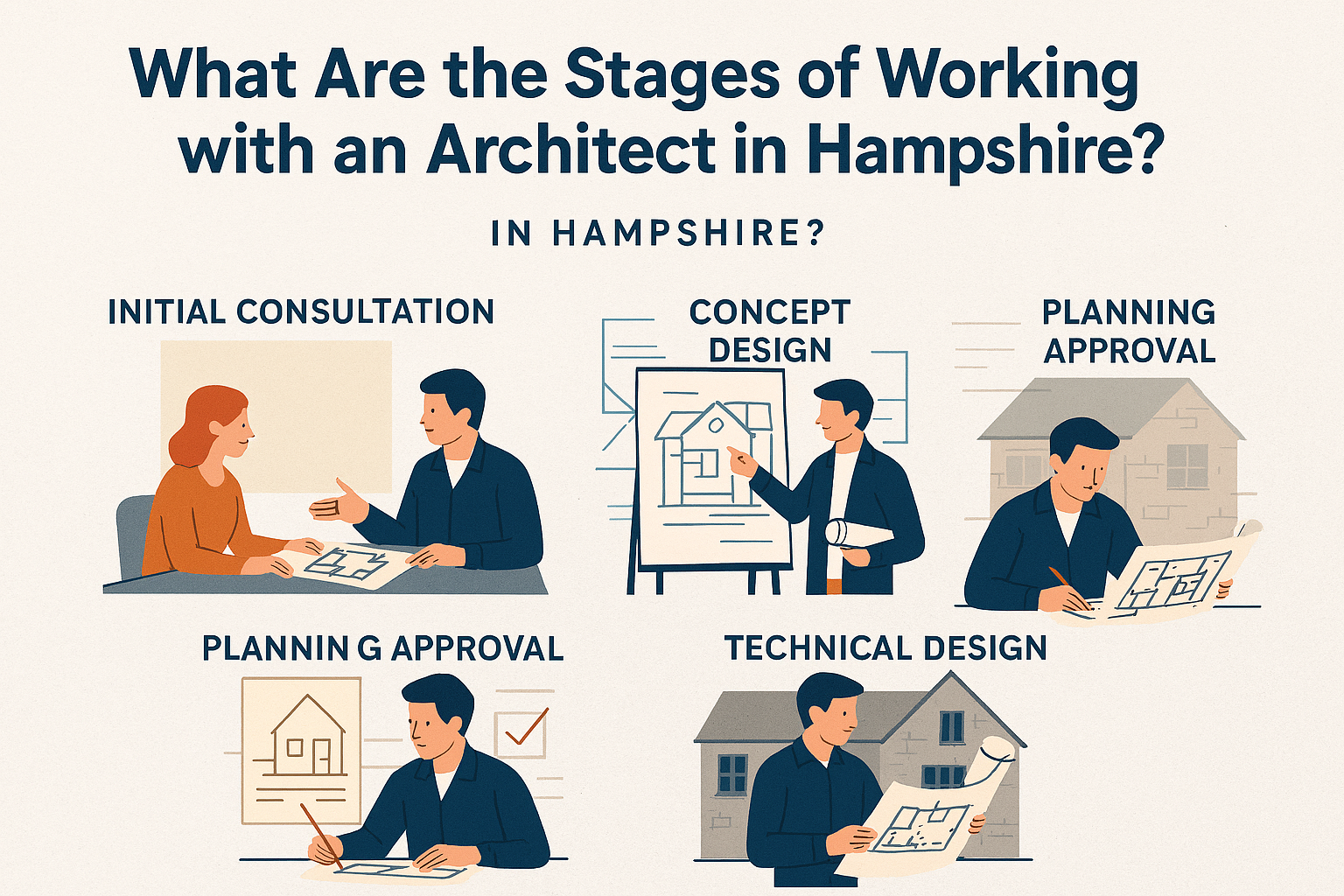
When you decide to work with an architect in Hampshire (for example, on a home extension or renovation in Winchester), the process typically unfolds in clear stages. Understanding these steps will help you know what to expect from first meeting to completed project. Here are the main stages of working with an architect, and what happens at each:
1. Initial Consultation & Briefing:
Every project begins with an initial meeting. In this stage, you’ll discuss your ideas, needs, and budget with the architect. Expect the architect to ask lots of questions – about how you use your home, your style preferences, and what problems you’re trying to solve (more space, more light, etc.). If the property is in Hampshire, the architect might also do a site visit around this time. They will note any context factors like neighbouring buildings, site access, or planning constraints (for instance, if you’re in a Winchester conservation area or a national park boundary). By the end of this stage, the architect will draft a project brief: a document outlining the agreed requirements and goals for the design.
2. Concept Design (Sketch Plans):
Using the brief, the architect then develops initial design ideas. This is a creative stage where they produce concept sketches or outline plans showing possible layouts and exterior looks. Good architects will usually offer a couple of options to get your feedback. For example, for a Hampshire cottage extension, one concept might show a modern glass design and another a traditional style – you can explore both. Through discussions and revisions, you and the architect refine the design until you’re happy with the direction. At this stage, nothing is final, so it’s the best time to make changes and ensure the design truly meets your needs.
3. Planning Approval Stage:
Once a concept is agreed, the architect prepares detailed planning application drawings (scale plans, elevations, and perhaps 3D views) and documents for submission to the local council. In Winchester or other parts of Hampshire, this stage can be critical due to strict planning rules. Your architect will make sure the design adheres to local policies (for example, respecting conservation area guidelines or green belt restrictions). They will compile the application, which may include a design and access statement explaining how the proposal fits the site and policy. The architect then submits the application on your behalf and acts as the agent, handling any communication with the council. The decision period is usually around 8 weeks, during which the architect may respond to any queries from the planning officer or adjust details if necessary. Thanks to their local experience, a Hampshire-based architect can often anticipate issues and address them proactively, increasing the likelihood of approval.
4. Technical Design & Building Regulations:
After planning permission is secured (or if it wasn’t needed, after the concept is finalised), the project moves into technical design. Here, the architect creates very detailed drawings and specifications that builders will use to construct the design. This includes structural layouts, electrical and lighting plans, plumbing, materials, and exact dimensions. In the UK, a crucial part of this stage is ensuring the design complies with Building Regulations – safety and quality standards for structure, fire, insulation, drainage, etc. The architect may work with structural engineers or other specialists now. For example, if you’re converting a loft, a structural engineer might design the steel beams, and the architect incorporates that into the plans. The outcome of this stage is a package of documents to submit for Building Control approval and to give to contractors for pricing.
5. Contractor Selection (Tender) and Contracts:
With detailed drawings ready, you’ll need a builder to carry out the work. Many architects in Hampshire will help you with the tendering process – basically, sending the plans out to several reputable contractors to get comparative quotes. They can recommend trusted local builders (which is valuable local knowledge) and evaluate the quotes to ensure everything is included. Once you choose a contractor, the architect can prepare a proper contract between you and the builder (often using a standard form like a JCT contract). This contract stage sets the ground rules for the build – timelines, payment stages, responsibilities – to protect you and ensure everyone is on the same page.
6. Construction & Project Oversight:
Now the building work begins. You might wonder, does the architect disappear now? Ideally, the architect remains involved during construction (though the extent depends on what you agree and pay for). In a full service, the architect will make site visits at key stages to monitor progress and quality. They act as your representative, checking that the work matches the plans and resolving any issues that come up. For example, if a hidden structural surprise emerges in your Winchester period home, the architect finds a solution with the builder. The architect can also administer the contract – meaning they’ll handle paperwork like any changes to scope, certify builder payments are fair for work done, and make sure the project stays on track as best as possible.
7. Completion and Handover:
As the project finishes, the architect does final inspections. They create a snagging list (small defects or finish issues for the builder to fix before final payment). They ensure you have all relevant compliance certificates (like Building Control approval, gas/electrical certificates, etc.). A good architect will walk through the completed project with you to confirm everything meets the design intent and your satisfaction. This stage closes out the project formally. Some architects even photograph the finished work for their portfolio and check in after you’ve settled in, to see how the space is working for you.
Working with a local architect vs. a distant one: Throughout these stages, working with an architect who knows Hampshire and Winchester can make things smoother. They’ll already be familiar with local building styles, the expectations of planning officers at Winchester City Council or other district councils, and local builders and suppliers. This local expertise, combined with following the clear stages above, helps turn your initial ideas into a successful finished project with as few surprises as possible.